Have you ever noticed that pets often bear a remarkable similarity to their owners?
Regardless of whether owners subconsciously choose pets that resemble them, or the two gradually start to mirror each other over time, it’s a well-documented and entertaining phenomenon.
It turns out something similar happens in the food world: Many foods that look like body parts also benefit those very same body parts.
As with pets and their owners, there’s something intriguing about these visual similarities. Whether it’s a playful coincidence or something deeper, I don’t know, but the science behind the benefits is concrete and fascinating.
7 Foods That Look Like Body Parts They Benefit: A Visual Guide to Nutrition
During my time in medical school, a professor showed us photos of various fruits and vegetables alongside the body parts they help support. The visual similarities were striking. Of course, the appearance itself doesn’t provide the health benefits, but these foods’ underlying nutrition makes a real difference in the health of their anatomical counterparts.
To add a little spice to your healthy eating, or to provide a memory aid for beneficial food choices, let’s walk through some of the most remarkable examples of foods that look like body parts they’re good for.
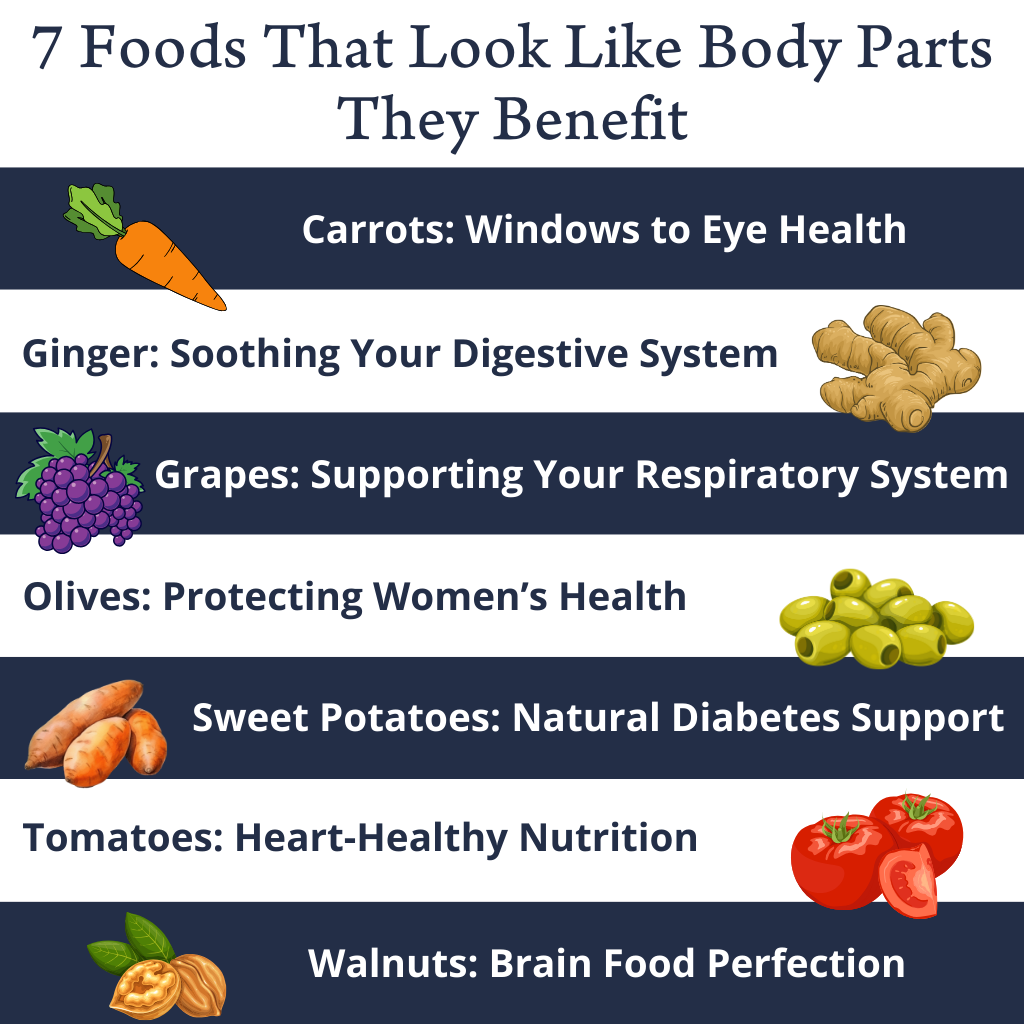
Carrots: Windows to Eye Health
You might not be surprised to find carrots on this list for eye health, but where does the resemblance come in? As my med school professor demonstrated, the center of a cut carrot looks remarkably similar to your eye’s iris!

Source: Canva
Carrots get their vibrant orange color from beta carotene, which converts to vitamin A in your body. This nutrient is absolutely essential for the cells that facilitate vision, helping prevent macular degeneration and cataracts.
Ginger: Soothing Your Digestive System
Ginger is another ingredient well-known for its health-conferring properties, but have you considered what body part it resembles? That knobby, branching growth and irregular texture are rather reminiscent of the digestive tract!

Source: Canva
This ancient herb has been used for centuries across many cultures to soothe digestive issues like motion sickness, abdominal gas and bloating, irritable bowel syndrome, and diarrhea. Research has even shown that ginger inhibits the growth of cancer cells in the bowel.
Grapes: Supporting Your Respiratory System
Perhaps a less well-known addition to this list is the grape. Grapes look like a larger version of the alveoli inside your lungs — those tiny air sacs that exchange carbon dioxide and oxygen with your blood.

Source: Canva
Grapes contain high levels of proanthocyanidins, powerful antioxidants that lower your risk of lung cancer and help with allergy-induced asthma.
Olives: Protecting Women’s Health
Olives — from which we get olive oil — are excellent for overall health, but they particularly benefit a body part they resemble: the ovaries.

Source: Canva
Rich in antioxidants and healthy fats, olives support hormonal balance and blood flow to reproductive organs. One study even suggests olive oil may reduce the risk of ovarian cancer.
Sweet Potatoes: Natural Diabetes Support
When naming fruits and vegetables that look like body parts, sweet potatoes might not be an obvious inclusion. But it turns out their elongated, curved shape looks quite similar to the pancreas — that obscure organ tucked beneath your stomach and liver.

Source: Canva
Boiled sweet potatoes offer a nutrient-dense, low-glycemic-index food to help control diabetes, a disease of the pancreas. Plus, the orange color of sweet potatoes comes from beta carotene and other antioxidants that help lower cancer risk.
Tomatoes: Heart-Healthy Nutrition
Cut a tomato in half and you’ll see a surprising representation of the chambers of your heart. The stark red color doesn’t hurt to reinforce the resemblance.

Source: Canva
The red of tomatoes comes from lycopene, a powerful antioxidant that lowers heart disease risk.
Walnuts: Brain Food Perfection
Perhaps the most remarkable example of a food that looks like the body part it helps is the walnut.
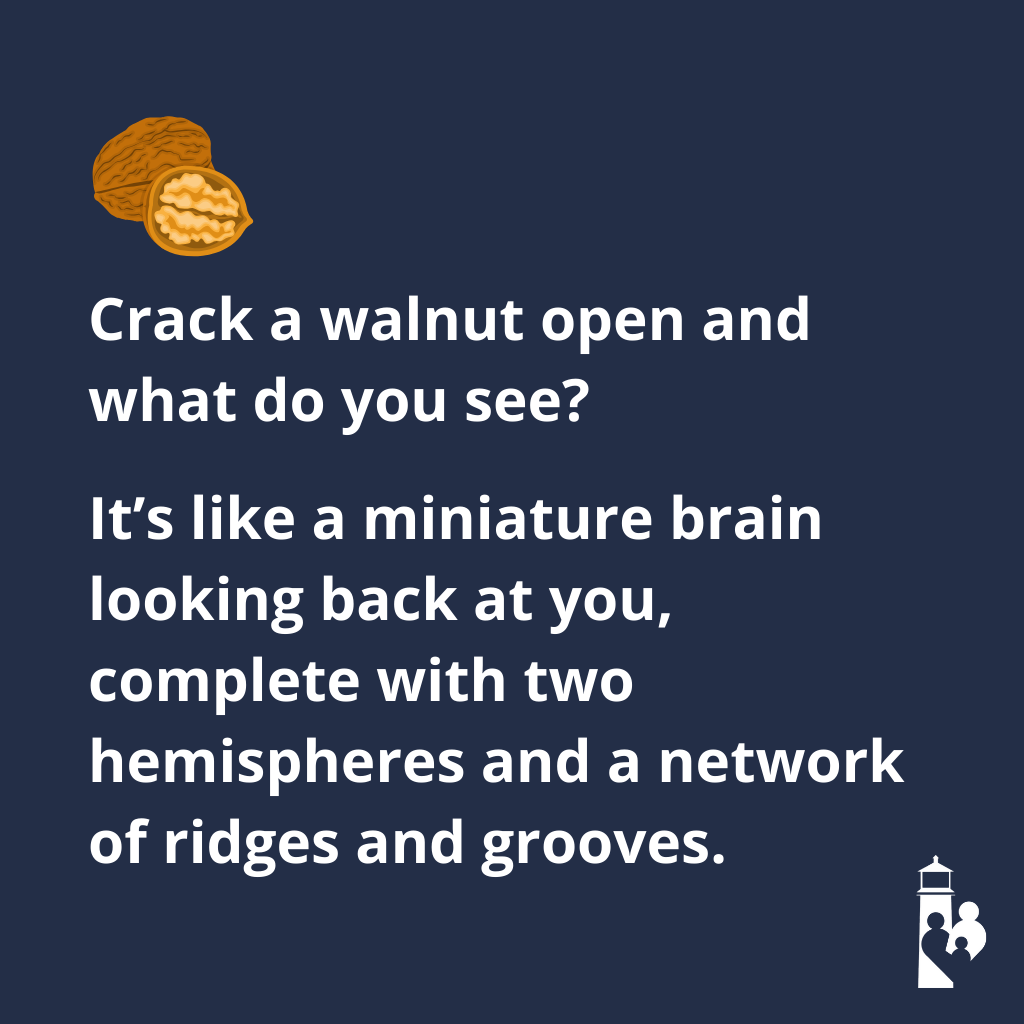
Crack a walnut open and what do you see? It’s like a miniature brain looking back at you, complete with two hemispheres and a network of ridges and grooves.

Source: Canva
Walnuts are high in omega-3 fatty acids, folate, and vitamin E, all crucial for optimal brain function. In particular, walnuts support neurotransmitters — the chemicals that transmit nerve impulses in your brain.
Foods That Look Like Body Parts: The Hippocrates Connection
When I consider the number of foods that look like body parts they’re good for — and the above isn’t even an exhaustive list — it’s hard to believe it’s just a coincidence. But whether it is or it isn’t, I’m reminded of Hippocrates’ ancient wisdom: “Let food be thy medicine and medicine be thy food.”
Whether coincidence or not, these visual similarities serve as a helpful reminder of the underlying nutrition in these foods. So, when you’re in the grocery aisle or looking for a snack at home, take a second to pause and appreciate the cues in these foods’ appearances — and maybe let it guide your choice in the moment.